Back to Roastery
 Buy Coffee
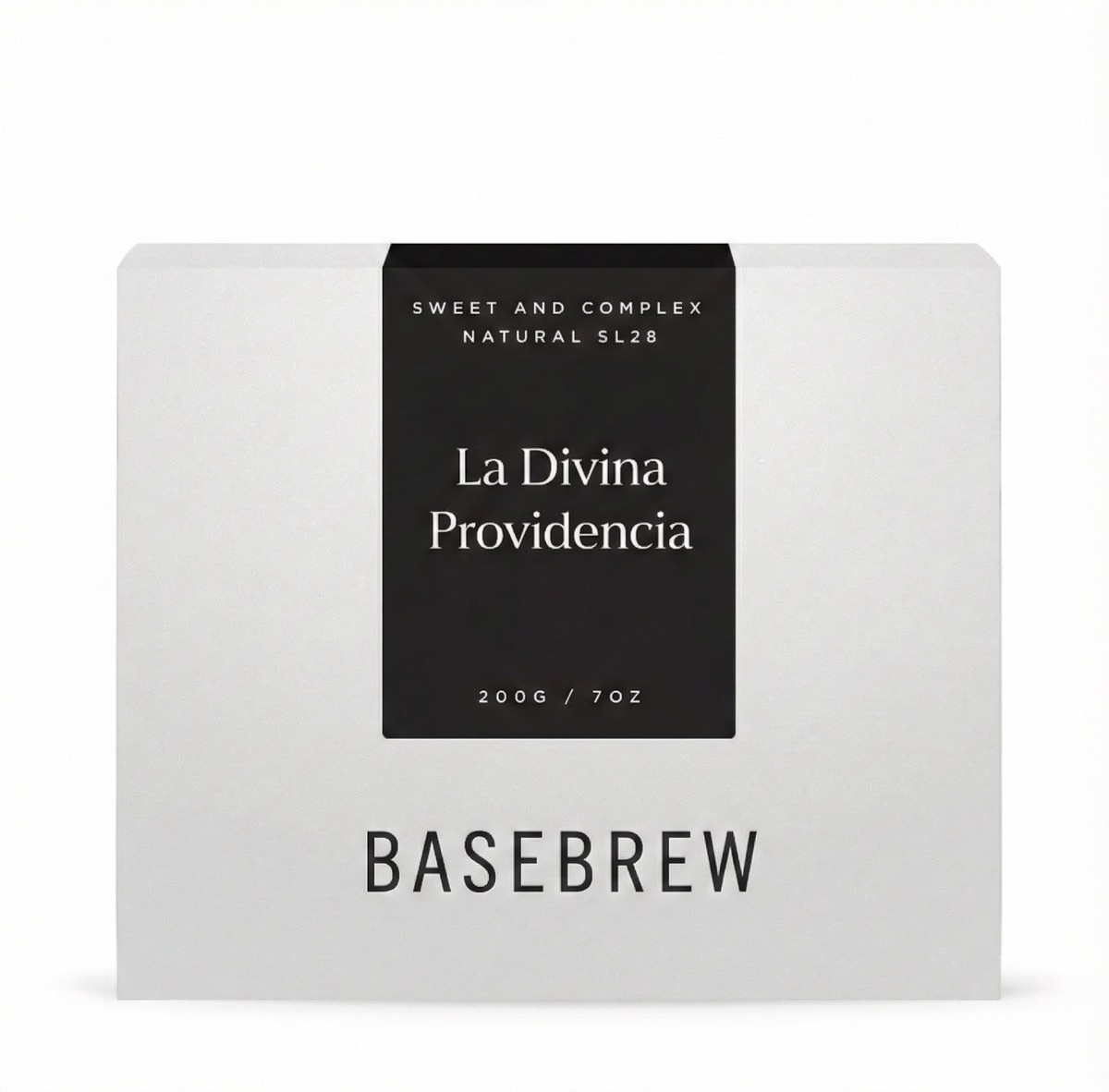
La Divina Providencia
Origin & Traceability
Farm / Station
La Divina Providencia
Region
Santa Ana
Country
El Salvador
Variety
SL28
Processing
Natural
Altitude
1700 masl
Story
Complex fruit notes in this natural SL28 by Roberto Ulloa at La Divina, high on the volcanic slopes of Santa Ana
Recipes
| Equipment | Dose | Grinder | Grind | Water | Bloom Water | Temp | Yield | Ratio | Time | Bloom Time | TDS | Ext. | Basket | Flow | Pressure | pH | Water TDS | Water Comp. | Instructions | Comments | |
|---|---|---|---|---|---|---|---|---|---|---|---|---|---|---|---|---|---|---|---|---|---|
Pour Over | Hario V60 Ceramic Coffee Dripper | 15 | Comandante C40 Red Clix | 44 Clicks | 250 | 60 | 92 | — | 1:17 | 3:00 | 45s | — | — | — | — | — | 7.4 | 150ppm | Water is one of the most critical components of an excellent coffee experience. We recommend using mineral water of a soft Total Dissolved Solids count, ideally below 150 ppm. | 1. Preparation
Place your filter paper in the V60 dripper.
Rinse thoroughly with hot water to remove any paper taste and pre-heat the brewer and carafe.
Discard the rinse water from the carafe.
Add 15g of freshly ground coffee and tap the sides to level the bed. Tare your scale.
2. The Bloom (0:00 – 0:45)
Start your timer.
Pour 60g of water quickly and evenly over the grounds.
Note: La Cabra recommends minimal agitation. Do not stir or swirl the bloom; let the coffee degas naturally.
3. Second Pour (0:45 – 1:30)
At 0:45, pour water until the scale reads 155g (adding 95g).
Use slow, steady circular motions starting from the center and moving outwards, then back to the center. Avoid pouring directly onto the paper edges.
4. Final Pour (1:30 – 2:30)
At 1:30, pour the remaining water until you reach 250g (adding 95g).
Maintain the same gentle circular motion.
Once finished pouring, let the water draw down completely.
5. Serve
The water should finish draining between 2:30 and 3:00.
Remove the dripper, swirl the carafe to aerate and equalize the temperature, and enjoy. | — |
Pour Over | Kalita Wave 185 | 15 | Comandante C40 Red Clix | 46 Clicks | 250 | 60 | 94 | — | 1:17 | 2:45 | 45s | — | — | — | — | — | 7.4 | 150ppm | Water is one of the most critical components of an excellent coffee experience. We recommend using mineral water of a soft Total Dissolved Solids count, ideally below 150 ppm. | 1. Preparation
Place the filter in the Wave 185. Rinse it by pouring only into the center to keep the ridges intact.
Add your 15g of coffee. Shake it well to ensure the bed is perfectly flat—this is crucial for small doses in large brewers.
2. The Bloom (0:00 – 0:45)
Start your timer.
Pour 45g of water quickly and evenly.
Because the bed is shallow, do not stir. Just let it sit.
3. Second Pour (0:45 – 1:15)
At 0:45, pour until you reach 150g total (adding 105g).
Pour in very tight, slow circles in the center. Avoid the edges entirely; in a 185 dripper with a small dose, water hitting the edges will bypass the coffee and make your cup taste weak and sour.
4. Final Pour (1:30 – 2:00)
At 1:30, pour the remaining water until you reach 250g.
Again, keep your circles tight and centered.
Once you finish pouring, give the dripper one tiny, gentle swirl to level the grounds as they settle.
5. Drawdown
The water should finish draining through the bed by 2:30 – 2:45. | — |
Pour Over | Chemex | 30 | Comandante C40 Red Clix | 58 Clicks | 500 | 60 | 94 | — | 1:17 | 4:30 | 45s | — | — | — | — | — | 7.4 | 150ppm | Water is one of the most critical components of an excellent coffee experience. We recommend using mineral water of a soft Total Dissolved Solids count, ideally below 150 ppm. | 1. Preparation
Place the Chemex filter with the 3-layer side facing the spout.
Rinse the filter with hot water to remove paper taste and preheat the glass. Discard the water.
Add your 30g of coffee and shake gently to level the bed.
2. The Bloom (0:00 – 0:45)
Start your timer.
Pour 60g–80g of water, making sure to saturate all grounds.
Chemex can benefit from a very gentle swirl here to ensure no dry pockets, as the bed is deeper.
3. The Main Pours
We will use two main pours after the bloom to keep the thermal mass high but prevent the thick filter from clogging:
At 0:45: Pour until the scale reads 250g. Pour in steady, slow concentric circles.
At 2:00: Pour the remaining water until you hit 500g.
4. The Finish
Give the brewer one final, very gentle swirl to knock coffee off the filter walls.
Let it draw down completely. The thick Chemex paper will slow the flow significantly at the end.
Target Finish: The bed should look flat and dry by 4:30. | — |
Pour Over | Origami Dripper | 15 | Comandante C40 Red Clix | 38 Clicks | 225 | 50 | 95 | — | 1:15 | 3:00 | 60s | — | — | — | — | — | 7.4 | 150ppm | Water is one of the most critical components of an excellent coffee experience. We recommend using mineral water of a soft Total Dissolved Solids count, ideally below 150 ppm. | 1. The Long Bloom (0:00 – 1:00)
Start your timer.
Pour 50g of water.
The Secret: Use a spoon or a chopstick to gently stir the bloom (2–3 swirls). This ensures every "Natural" particle is saturated.
Let it sit for a full 1 minute. This longer bloom increases the perceived sweetness and body.
2. The Agitation Pour (1:00 – 1:30)
At 1:00, pour until you hit 140g (adding 90g).
Pour aggressively in spirals from a slightly higher height. This agitation breaks up the coffee bed and forces more of those wild, fermented fruit notes out of the grounds.
3. The Slow Finish (1:45 – 2:15)
At 1:45, pour the remaining water gently until you reach 225g.
Keep the kettle spout very close to the water surface and pour in the center only. This prevents over-extracting bitterness at the end and keeps the cup "juicy."
4. The Drawdown
Give the brewer a small "tap" on the server to level the bed.
Let it drain. It should finish around 2:50.
Why this makes it "Funky":
Finer Grind (38 Clicks): Grinding finer increases the surface area, pulling out the more complex, heavier molecules that carry the "natural" character.
Higher Heat (95°C): Higher temperatures are better at breaking down the heavy fruit acids found in SL28 naturals.
Tight Ratio (1:15): By using less water, the flavors become more concentrated and syrupy, emphasizing the "blackberry jam" profile.
Bloom Agitation: Stirring the bloom helps release CO2 trapped in the dense SL28 beans, allowing the water to get deep into the "funk" during the rest of the brew. | — |
Quality Control
SCA Score
89
Tasting Notes
Complex fruit notes with bright red berry, sweet brown sugar and tropical fruit
Roast Specifications
Roast Profile
Filter
Roaster's Comments
We recommend resting our coffees for at least 10 days after the roast date, and we often find excellent results, especially for particularly dense coffees, beyond 6 weeks.